Case Study
Retail Web Application for a Real Estate Client
Architected a hybrid-rendered enterprise retail platform for a major Middle East real estate client — serving SEO-critical public pages and secure, real-time tenant dashboards within a single Next.js application.
The Problem
One platform, two very different experiences
The client needed SEO-indexed public pages for property discovery alongside secure, data-rich authenticated dashboards for tenants — all in one system. Existing approaches forced a trade-off: go fully static and lose real-time personalization, or go fully dynamic and sacrifice SEO performance and CDN scalability.
Architecture Decisions
How I solved it
Hybrid SSG/ISR + SSR rendering
Public pages (about, projects, news) built statically with ISR for automatic CMS-driven regeneration. Authenticated routes (dashboard, payments, documents) use SSR to guarantee fresh user-specific data on every request.
Centralized Redux Toolkit state
Dashboard interactions span multiple modules (payments, documents, store data) that share user session context. Redux Toolkit gave predictable cross-module state without prop drilling or duplicated API calls.
Service-layer API abstraction
Three distinct enterprise APIs — Salesforce, Yardi, and Sitecore CMS — each with different response shapes. A shared service layer standardized error handling, request formatting, and kept components decoupled from backend specifics.
Route-level code splitting
Authenticated modules like payments and documents are feature-heavy. Dynamic imports ensured those bundles were never sent to unauthenticated visitors, improving initial load for public pages.
Stack
Outcome
72 → 95
Lighthouse score
−25%
Bundle size reduction
+40%
Page load improvement
Product Screens
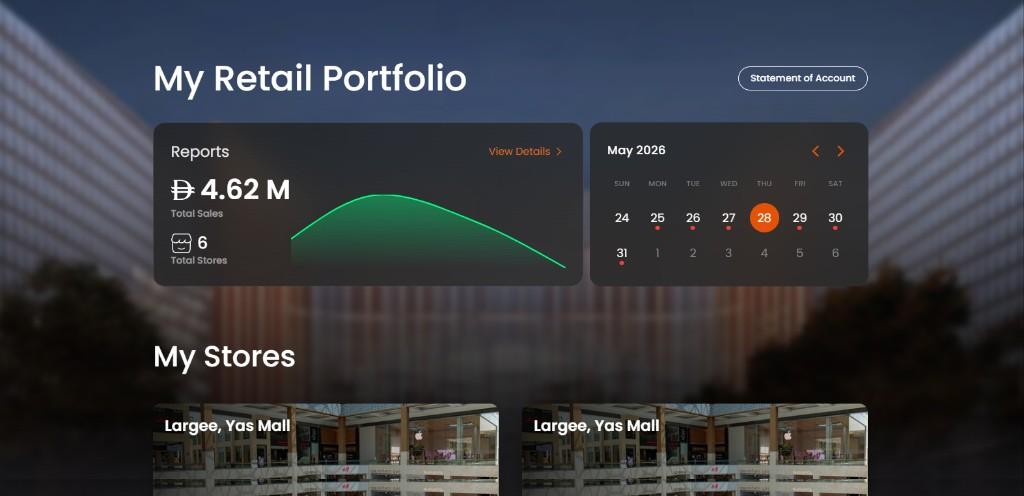
Portfolio Dashboard
Primary tenant dashboard with sales metrics and store insights.
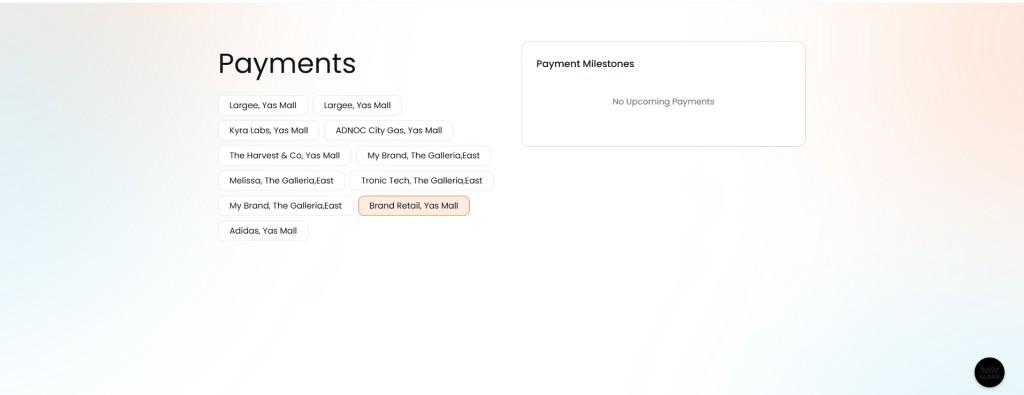
Payments Module
Payment milestones and multi-store filtering for tenant workflows.
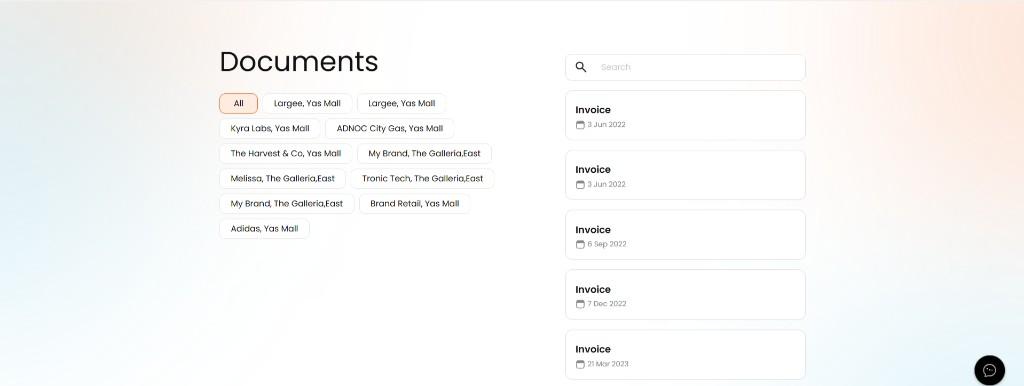
Documents Module
Searchable document and invoice retrieval for authenticated users.
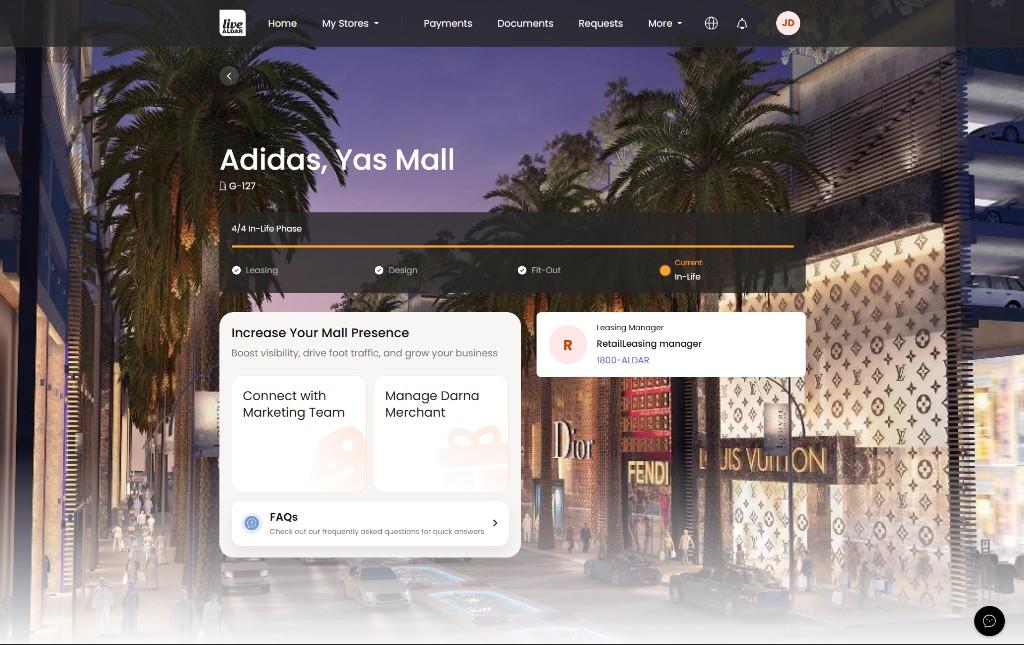
Store Detail Experience
Contextual store view with leasing progress and action-oriented cards.